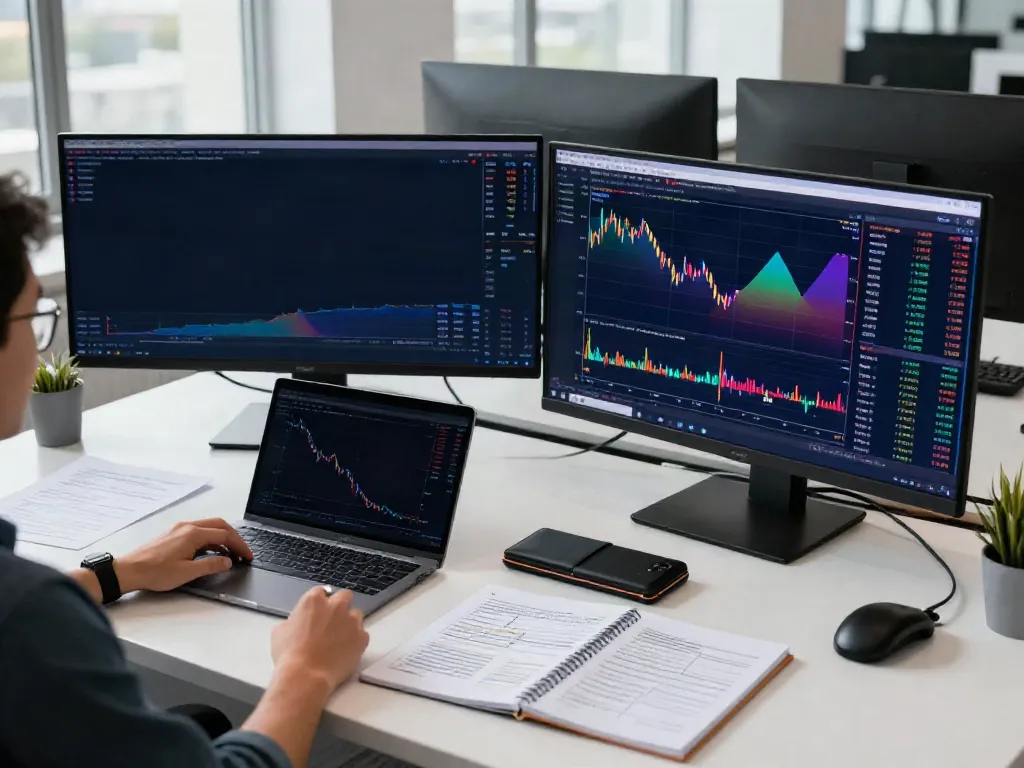
Understanding HK Stock Market Data Feed Fundamentals
The emergence of blockchain technology has fundamentally transformed the financial landscape, creating opportunities for new trading mechanisms and data access methodologies. This revolution is especially visible within the stock market domain, where real-time data becomes indispensable for traders and institutions alike. In this context, the HK stock market data feed serves as a crucial component, empowering developers and traders to execute informed strategies and stay ahead of market trends.
What is the HK Stock Market Data Feed?
The HK stock market data feed provides real-time and historical trading data from the Hong Kong Stock Exchange and other related financial markets. It is crucial for anyone engaged in trading or investing within these dynamic environments. This type of data feed typically reflects market prices, trading volumes, order book information, and various financial metrics tailored for quantitative analysis. Various platforms utilize such data feeds to create algorithms aimed at maximizing trading efficiency, performance analysis, and strategic market positioning.
Key Components of Real-Time Stock Data
Real-time stock data comprises several vital components:
- Price Data: Current prices, opening/closing prices, and price changes over predefined intervals are structured into accessible formats.
- Order Book Data: This includes details on the buy and sell orders currently open in the market, enabling users to analyze supply and demand.
- Volume Data: Transaction volumes signify market activity levels, offering insights into trading patterns and momentum.
- Market Depth: Insights into the broader market sentiment and liquidity can be gleaned from market depth data.
The Importance of Accurate Market Data for Trading
Accurate market data is foundational for effective trading. In financial markets, milliseconds can make the difference between profit and loss. High-quality data ensures that traders can make real-time decisions based on the most current information available. Furthermore, precise data aids in technical analysis, helping to identify patterns and potential price movements based on historical performance. As trading platforms increasingly rely on automation and algorithmic strategies, the emphasis on real-time, high-fidelity stock market data cannot be overstated.
Integrating HK Market Data into Trading Strategies
Building a Tech-Driven Trading System
As the trading landscape becomes increasingly tech-driven, integrating HK market data feeds into trading systems is paramount. Developers leverage the data to create automated trading algorithms, utilizing programming languages like Python or JavaScript. The construction of an efficient trading system entails selecting the right data sources, integrating reliable APIs, and ensuring that the infrastructure can handle real-time computations. The design must cater to strategies such as high-frequency trading (HFT) and algorithmic trading, requiring low latency and high throughput.
Analyzing Historical Data for Future Predictions
Historical data analysis provides the foundation for predictive modeling in trading. Traders often apply statistical techniques to uncover patterns that may repeat in future price movements. This process commonly employs methods such as moving averages, regression analysis, and machine learning techniques to forecast market trends. The significance of historical data is amplified when complemented by live data feeds, blending past and present movements to enhance prediction accuracy and investment strategies.
Real-Time vs. Delayed Data: Choosing the Right Option
When deciding between real-time and delayed data feeds, traders must consider their trading style and strategy. Real-time data, while more expensive, offers an instantaneous reflection of market conditions, critical for strategies that capitalize on small price movements. In contrast, delayed data may suffice for long-term investors, where immediate market reactions hold less relevance. Understanding the nature of your investments and trade execution speeds can guide your choice between these two types of data feeds.
Security Considerations When Using HK Stock APIs
Protecting Your Data and Privacy
Security in financial transactions is paramount, particularly when sensitive personal and financial data is involved. API integrations must be designed with stringent security measures to prevent unauthorized access and data breaches. This includes employing encryption protocols, secure authentication methods, and regular security audits to mitigate vulnerabilities. Implementing robust access controls ensures that only authorized personnel can view or manipulate sensitive data.
Preventing Common Cyber Threats in Trading
The financial sector is often targeted by cybercriminals. Common threats include phishing attacks, malware infections, and account takeovers. Educating users on recognizing suspicious emails and implementing multi-factor authentication (MFA) will bolster defense against these threats. Regularly updating software and employing strong, unique passwords provide additional layers of security against infiltration.
Best Practices for Secure API Integration
Integrating APIs securely requires adherence to several best practices, including:
- Utilizing HTTPS to encrypt data in transit.
- Employing OAuth for secure delegated access.
- Implementing rate limiting to mitigate abuse.
- Conducting regular API security assessments and penetration testing.
Leveraging DeFi Opportunities with HK Stock Data
Yield Farming and Staking Strategies with Stock Data
Decentralized Finance (DeFi) unlocks new possibilities for stock market participants. By using HK stock data, traders can harness yield farming and staking strategies, allowing them to earn passive income on their assets. Yield farming involves providing liquidity to DeFi protocols in exchange for rewards, while staking requires locking assets in a blockchain-based network to support operations like transaction validation.
Exploring Automated Trading Bots
Automated trading bots utilize real-time stock data to buy and sell assets based on predefined algorithms, thus executing trades with speed and precision. Bots can operate on multiple exchanges simultaneously, allowing traders to capitalize on arbitrage opportunities that would be impossible to exploit manually. However, careful strategy development and back-testing are essential to ensure the bot's effectiveness in various market conditions.
Accessing Liquidity Pools Effectively
Liquidity pools are essential for smooth trading operations within DeFi ecosystems. Understanding how to access these pools using HK stock market data enhances trading capabilities and liquidity provisions. Pool participation can also reward users with governance tokens, granting voting rights on protocol changes. Understanding dynamics such as impermanent loss is crucial for maintaining profitability while engaging in liquidity provision.
The Future of HK Stock Data and Crypto Regulations
Upcoming Changes in Cryptocurrency Regulations (2026)
The regulatory landscape for cryptocurrency is evolving rapidly as governments worldwide seek to establish frameworks that balance innovation with consumer protection. Significant changes are anticipated in 2026, particularly concerning the classification of digital assets as securities or commodities. The SEC (Securities and Exchange Commission) plans to implement stringent guidelines for Initial Coin Offerings (ICOs) and ensure compliance with KYC (Know Your Customer) and AML (Anti-Money Laundering) regulations.
Impact of Blockchain Technology on Stock Trading
Blockchain technology promises to revolutionize stock trading by enhancing transparency and security. By enabling decentralized exchanges (DEXs), blockchain eliminates the need for central authorities, reducing transaction costs and enhancing the speed of trades. Furthermore, the ability to tokenize traditional assets allows for fractional ownership, fostering inclusivity in financial markets.
Predicting Trends in the HK Stock Market
As traders look towards the future, analyzing trends in the HK stock market becomes essential. The integration of technological advancements and macroeconomic factors will shape future market dynamics. Keeping an eye on geopolitical events, corporate earnings, and international trade agreements will help market participants refine their strategies and adapt to shifting trends.